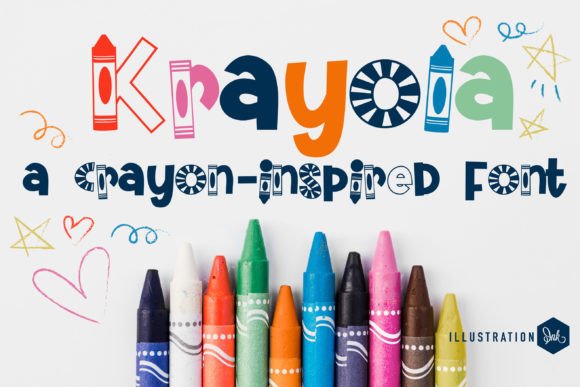
Krayola: A Whimsical Display Font for Engaging Content
Introducing Krayola, a playful and intricately designed display font that brings a touch of whimsy to your editorial projects. Inspired by the vibrant world of school supplies, Krayola is perfect for adding a unique and eye-catching element to your designs.
Visual Characteristics and Editorial Appeal
Krayola's design is characterized by its intricate details and playful flair, making it an ideal choice for projects that need a creative and engaging visual tone. The font's personality is lively and energetic, which can help set a positive and inviting mood for your content. Whether you're working on a lifestyle blog, a recipe ebook, or a digital magazine, Krayola can add a distinctive and memorable touch to your work.
Using Krayola in Editorial Design
Krayola is particularly well-suited for titles, subtitles, and other prominent text elements where you want to grab the reader's attention. Here are some practical ways to incorporate Krayola into your editorial design:
- Blog Headers and Magazine Covers: Use Krayola for the main title to create a bold and inviting look. Pair it with a clean sans serif font for the subheadings and body text to maintain readability.
- Ebook Titles and Chapter Openers: Add a splash of creativity to your ebook covers and chapter titles with Krayola. This can make your content stand out and feel more engaging to the reader.
- Newsletter Graphics and Quote Layouts: Incorporate Krayola for pull quotes and key messages in your newsletters. Its playful style can help highlight important points and make them more memorable.
- Printable Guides and Lead Magnets: Use Krayola for the cover and section headings in your printable guides and lead magnets. This can help create a consistent and visually appealing brand identity.
Supporting Visual Hierarchy and Publication Identity
Krayola's distinctive style makes it an excellent choice for establishing a strong visual hierarchy in your content. By using Krayola for key elements like titles and headings, you can guide the reader's attention and create a clear structure. This is especially useful in longer documents like ebooks and magazines, where maintaining reader engagement is crucial.
Additionally, Krayola can help build a consistent and recognizable publication identity. Using the same font across different materials, such as a digital magazine, a newsletter, and a series of printables, can help create a cohesive and professional look.
Readability Considerations
While Krayola is highly effective for titles and headings, it's important to consider readability for longer text. For body copy, pair Krayola with a more readable serif or sans serif font. This combination ensures that your content remains both visually appealing and easy to read, whether on screen or in print.
For screen reading, ensure that Krayola is used at a size that maintains clarity. For PDF exports and print, check that the font renders well at smaller sizes and in different printing conditions. This will help ensure that your content looks great across all platforms.
Font Pairing for Editorial Use
To create a balanced and harmonious design, consider pairing Krayola with complementary fonts. Here are some suggestions:
- Serif Fonts: Pair Krayola with a classic serif font for a traditional and elegant look. This combination works well for print publications and more formal content.
- Sans Serif Fonts: Combine Krayola with a clean and modern sans serif font for a contemporary and versatile design. This is ideal for digital content and minimalist layouts.
Practical Note on Commercial Licensing
When using Krayola for commercial projects such as ebooks, templates, printables, paid newsletters, client publications, and digital downloads, be sure to check the licensing terms. Ensuring that you have the appropriate license not only protects your work but also supports the creators behind this beautiful font.
In summary, Krayola is a versatile and visually appealing display font that can enhance the look and feel of your editorial projects. By using it thoughtfully and creatively, you can create content that stands out and engages your audience effectively.